Greece stands as a living testament to the divine, a land where mythology breathes through the very soil and sea. From the sun-drenched islands to the rugged mainland, the presence of the gods feels almost tangible, as if Zeus might still cast a thunderbolt from Mount Olympus or Poseidon could stir the Aegean with his trident. This is not merely a country of ruins and relics; it is a realm where ancient stories continue to shape the landscape and the spirit of its people. To explore Greece is to walk in the footsteps of deities and heroes, to feel the weight of epic tales in every temple stone and whispering olive grove.
The heart of Greek divinity beats strongest at Mount Olympus, the mythical home of the twelve Olympian gods. Towering over the northern mainland, this majestic peak has captured human imagination for millennia. Though physically climbable, its spiritual ascent remains a journey into the realm of legends. Here, according to Hesiod and Homer, Zeus ruled from his cloud palace while Hera, Athena, Apollo, and the other immortals conducted their divine affairs. The mountain's often shrouded summit seems to deliberately maintain its mystery, keeping mortal eyes from fully penetrating the secrets that might still linger where the gods supposedly feasted on ambrosia and decided human fates.
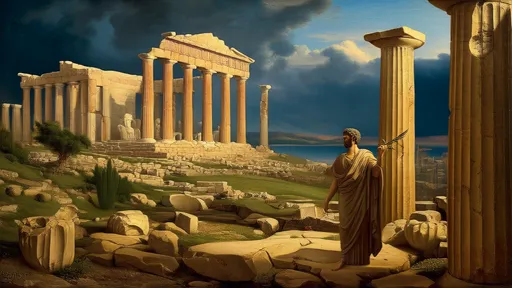
Throughout Greece, magnificent temples stand as enduring monuments to humanity's attempt to reach toward the divine. The Parthenon, perched atop Athens' Acropolis, represents perhaps the most magnificent dedication to a patron deity. Built for Athena Parthenos, the goddess of wisdom and warfare, this architectural marvel continues to awe visitors with its mathematical precision and artistic perfection. Similarly, the Temple of Apollo at Delphi once drew ancient pilgrims seeking prophecies from the famous Oracle, who channeled the sun god's wisdom. These structures were not merely places of worship but represented the very intersection of human and divine realms, where mortals could approach the powerful beings who controlled their destinies.
Beyond the mainland, the Greek islands each carry their own divine associations. Crete, the largest island, claims the magnificent Palace of Knossos, center of the Minoan civilization and legendary home of the Minotaur. According to myth, King Minos housed this half-man, half-bull creature in an elaborate labyrinth designed by the brilliant architect Daedalus. The archaeological remains whisper stories of a sophisticated culture that may have inspired these legendary tales. Meanwhile, according to some traditions, the beautiful island of Rhodes emerged as a special gift from the sun god Helios, while Delos gained fame as the sacred birthplace of Apollo and Artemis, making it one of the most important religious sanctuaries in the ancient world.
The influence of Greek mythology extends far beyond physical sites into the very cultural consciousness of the nation. Traditional festivals often have roots in ancient celebrations honoring various deities. The concept of philoxenia, or friendliness to strangers, finds its origin in the belief that gods might travel in disguise among mortals. Even today, many Greeks might half-jokingly blame a sudden storm on Zeus's anger or attribute a successful voyage to Poseidon's blessing. This seamless blending of ancient belief with modern life creates a unique cultural tapestry where the mythical feels immediately present rather than confined to history books.
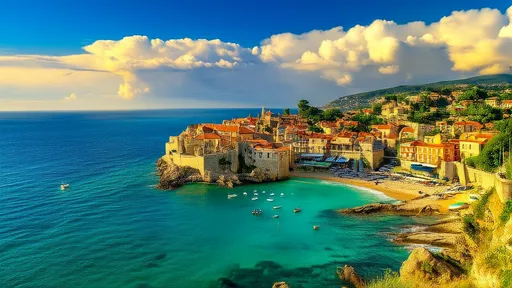
Modern travelers to Greece can embark on their own odyssey through these lands of legend. Following the paths of ancient pilgrims, one might begin in Athens before journeying to Delphi to imagine the Pythia's prophecies, then north to Thessaloniki before approaching Mount Olympus. A cruise through the Aegean islands reveals countless sites of mythological importance, from the Minoan palaces of Crete to the spectacular sunsets of Santorini, which some associate with the lost civilization of Atlantis. Each destination offers not just beautiful scenery but layers of stories that have shaped Western civilization for thousands of years.
What makes Greece truly extraordinary is how its mythological heritage remains vibrantly accessible. Unlike civilizations whose beliefs exist only in fragments, Greece's divine stories maintain a continuous presence in the culture. The same mountains that were considered holy in antiquity still command awe; the same seas that bore Odysseus's ship still sparkle under the Mediterranean sun; the same constellations that guided ancient heroes still shine in the night sky. This continuity creates a powerful experience for visitors, who don't just learn about mythology but feel themselves becoming part of its ongoing narrative simply by breathing the air and walking the paths of this extraordinary land.
To visit Greece is to understand why these stories emerged here, in this particular landscape of dramatic mountains, endless coastline, and brilliant light. The very geography seems designed for epic tales—hidden coves perfect for mythological monsters, towering cliffs from which gods might observe mortal affairs, and mysterious caves that could easily serve as entrances to the underworld. The intense Mediterranean light creates sharp contrasts between shadow and illumination, much like the Greek myths themselves which explore the bright possibilities of heroism and the dark depths of human flaw. In this land of extraordinary beauty and dramatic natural forces, the existence of powerful gods seems not just possible but inevitable.
The legacy of Greece's gods extends far beyond its borders, having shaped art, literature, and thought across Western civilization. Yet to experience these myths in their homeland is to understand them in an entirely different context. Here, the stories of Zeus's power, Athena's wisdom, Apollo's art, and Poseidon's temper are not abstract concepts but narratives woven into the very fabric of the land. The rocks themselves seem to remember when giants walked the earth, the seas recall sailing heroes, and the olive trees whisper about goddesses who gifted civilization to humanity. This is the magic of Greece—it invites you not just to see history but to feel mythology alive in every stone, wave, and mountain breeze.
By /Sep 1, 2025

By /Sep 1, 2025

By /Sep 1, 2025
By /Sep 1, 2025

By /Sep 1, 2025
By /Sep 1, 2025

By /Sep 1, 2025
By /Sep 1, 2025
By /Sep 1, 2025

By /Sep 1, 2025

By /Sep 1, 2025
By /Sep 1, 2025

By /Sep 1, 2025
By /Sep 1, 2025

By /Sep 1, 2025
By /Sep 1, 2025

By /Sep 1, 2025
By /Sep 1, 2025
By /Sep 1, 2025
By /Sep 1, 2025