From Farm to Table" Movement: The Gap Between Ideal and Reality

Aug 29, 2025 By

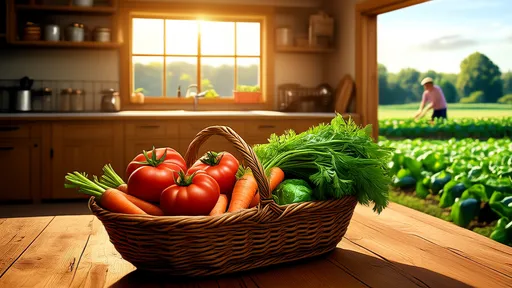
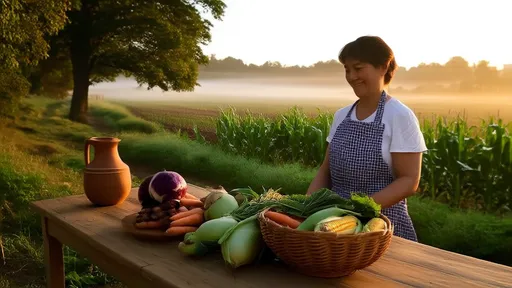
The Farm-to-Table movement has captured the imagination of food enthusiasts and conscientious consumers alike, painting a vivid picture of idyllic rural landscapes and wholesome, locally sourced produce. It promises a culinary utopia where every meal tells a story of sustainability, community, and transparency. Yet, beneath this appealing veneer lies a complex reality, one where ideals often clash with practical limitations, economic pressures, and systemic challenges. The journey from farm to table is far more intricate than it appears, and the gap between aspiration and achievement reveals much about our modern food systems.

At its core, the Farm-to-Table philosophy advocates for shortening the supply chain between producers and consumers. Proponents argue that this approach supports local economies, reduces environmental impact, and ensures fresher, more nutritious food. The movement has gained significant traction over the past decade, fueled by growing concerns over industrial agriculture, food safety scandals, and a desire for greater connection to what we eat. Farmers' markets, community-supported agriculture (CSA) programs, and restaurants boasting locally sourced menus have become symbols of this shift toward a more ethical and sustainable food culture.

However, the ideal of a seamless, localized food system often bumps against the hard realities of scale, logistics, and economics. For many small-scale farmers, the costs associated with direct-to-consumer sales can be prohibitive. Transportation, packaging, marketing, and compliance with food safety regulations require resources that family-owned operations may lack. While consumers express willingness to pay a premium for locally sourced products, this demand is not always consistent or sufficient to sustain farmers through seasonal fluctuations and unpredictable yields.

Moreover, the definition of "local" itself is fraught with ambiguity. Does it mean food grown within a 100-mile radius? Within the same state? The lack of standardized criteria allows for considerable flexibility, which some businesses exploit for marketing purposes. This has led to accusations of "greenwashing," where establishments exaggerate their commitment to local sourcing to attract customers without substantially altering their supply chains. Such practices undermine the movement's credibility and dilute its impact.

Another significant hurdle is accessibility. Farm-to-Table offerings are often associated with higher price points, making them inaccessible to lower-income households. This economic barrier perpetuates a divide where wholesome, sustainably produced food becomes a luxury rather than a universal right. While initiatives like subsidized CSA shares or farmers' markets accepting SNAP benefits attempt to bridge this gap, they remain limited in scope and reach. The movement risks becoming elitist if it fails to address issues of equity and inclusion.

Seasonality further complicates the Farm-to-Table ideal. In regions with harsh winters or limited growing seasons, relying exclusively on local produce means months of scarcity or repetitive menus. Restaurants committed to the philosophy must either creatively preserve foods or temporarily source from farther afield, challenging the very notion of locality. Consumers, accustomed to year-round availability of diverse produce, may find it difficult to adjust their expectations and eating habits to align with seasonal realities.

Despite these challenges, the Farm-to-Table movement has undeniably catalyzed positive change. It has raised awareness about the origins of our food and encouraged dialogue about agricultural practices. Small farmers have found new markets and community support, while consumers have developed deeper appreciation for the labor and care involved in food production. This heightened consciousness is perhaps the movement's most enduring legacy, fostering a culture that values quality, sustainability, and connection.

Technology is also playing a role in narrowing the gap between ideal and reality. Online platforms connect farmers directly with consumers, streamlining distribution and reducing costs. Innovations in vertical farming, hydroponics, and sustainable packaging offer solutions to some of the logistical and environmental challenges. As these technologies evolve, they may make localized food systems more viable and scalable.

Ultimately, the Farm-to-Table movement is a work in progress—a compelling vision that inspires incremental improvements rather than overnight transformation. Its successes highlight the potential for more resilient and transparent food networks, while its shortcomings underscore the need for systemic support, policy interventions, and consumer education. Bridging the distance between farm and table requires not just individual choices but collective action and innovation.

As we move forward, the goal should be to integrate the principles of sustainability and locality into mainstream food systems, making them accessible to all rather than a niche privilege. This means supporting policies that aid small farmers, investing in infrastructure that shortens supply chains, and fostering a culture that values seasonality and reduces waste. The journey from farm to table is indeed long and fraught with challenges, but each step taken brings us closer to a food system that is equitable, sustainable, and truly nourishing for both people and the planet.

Recommend Posts
Food

Zero-waste Kitchen" Practice: 10 Tips to Reduce Food Waste

By /Aug 29, 2025

In the heart of every home, the kitchen stands as both a sanctuary of nourishment and, unfortunately, a significant source of waste. The concept of a zero-waste kitchen is not merely a trend but a profound shift in our relationship with food, resources, and the environment. It's a philosophy that challenges us to rethink our habits, from the moment we plan our meals to the way we handle what we might traditionally consider scraps. This journey toward a more sustainable kitchen is paved with intention, creativity, and a deep respect for the ingredients that fuel our lives.
Food

The Rise of Snackification: The Demise of Traditional Meals and the Emergence of Mini-Meals

By /Aug 29, 2025

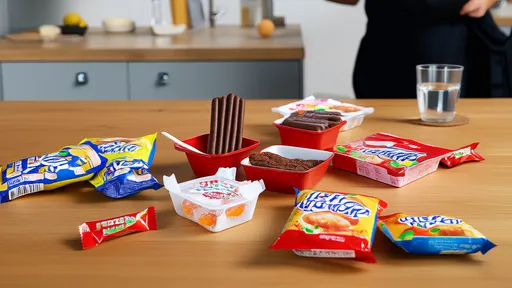
The traditional three-meal structure that has long defined Western eating habits is quietly disintegrating. For generations, the rhythm of breakfast, lunch, and dinner served as the culinary backbone of daily life, a schedule dictated by work hours, school bells, and cultural norms. Yet, a profound shift is underway, one that is dismantling these rigid timelines and replacing them with a more fluid, personalized, and opportunistic approach to eating. This phenomenon, known as Snackification, is not merely about the rise of the potato chip or the protein bar; it is a fundamental restructuring of our relationship with food, signaling the decline of the formal meal and the ascendancy of the small, frequent bite.
Food

Achieving the Effect of Traditional 7-Day Pickling in Just 24 Hours with Vacuum Packaging

By /Aug 29, 2025

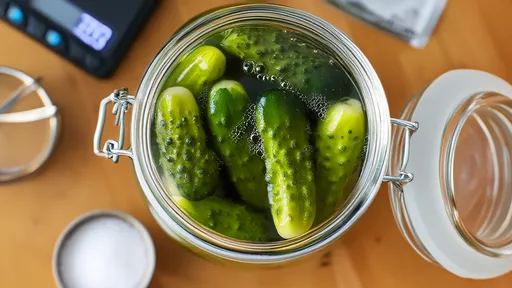
In the culinary world, time often dictates quality. Traditional curing methods, revered for their depth of flavor and perfect texture, typically demand a significant investment of this precious resource. A seven-day brine or dry cure has long been the gold standard for products like salmon, duck breast, or even certain cuts of pork. The process is slow, allowing salt and seasonings to penetrate the muscle fibers gradually, drawing out moisture and concentrating flavors in a dance that cannot be rushed—or so we thought. A revolutionary technique is challenging this age-old axiom, promising to deliver results indistinguishable from a week-long cure in a mere 24 hours. This method leverages a fundamental principle of physics: vacuum sealing.
Food

The Social Power of Commensalism": How Food Connects People

By /Aug 29, 2025

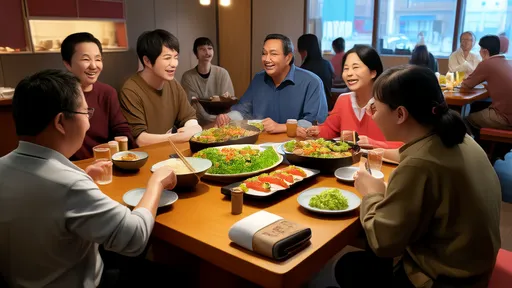
In the quiet hum of a bustling restaurant or the warm glow of a family dinner, something profound is taking place. It is more than just the consumption of calories; it is the practice of commensalism, the act of sharing a table and, in doing so, sharing our lives. This ancient ritual, rooted in our very biology, remains one of the most potent yet understated social forces in human existence. Food is the universal language of care, the currency of community, and the quiet architect of our deepest connections.
Food

Harnessing the Ugly Food Movement: Saving Misshapen Fruits and Vegetables

By /Aug 29, 2025

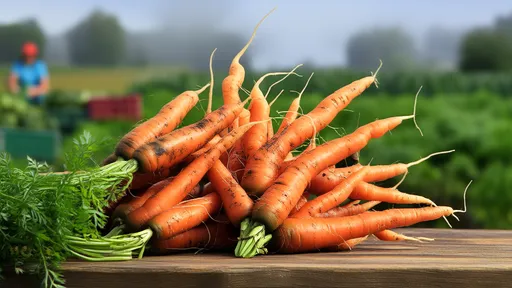
In the labyrinth of modern supermarkets, where apples gleam with waxen perfection and carrots stand in uniform orange battalions, a quiet revolution is taking root. It’s a movement centered not on the pristine and the symmetrical, but on the odd, the knobby, the scarred, and the twisted—the so-called "ugly produce." For decades, these misfits of the agricultural world have been discarded, plowed under, or left to rot, victims of stringent cosmetic standards imposed by retailers and, by extension, consumers. Yet, as awareness grows about the staggering scale of food waste and its environmental and economic toll, these imperfect fruits and vegetables are stepping into the spotlight, championed by startups, farmers, and environmentally conscious shoppers alike. This is not merely a trend; it is a necessary shift in our relationship with food, a challenge to deeply ingrained aesthetics, and a critical step toward a more sustainable and equitable food system.
Food

Hot Air Circulation Oven: Why It Bakes Faster and More Uniformly

By /Aug 29, 2025

When it comes to modern kitchen appliances, the convection oven has revolutionized the way we bake and roast, offering a significant upgrade over traditional radiant ovens. The core principle behind its superior performance lies in its innovative use of airflow technology. Unlike conventional ovens that rely solely on stationary heating elements, convection ovens employ a fan and exhaust system to circulate hot air around the food. This active circulation creates a dynamic cooking environment where heat is transferred more efficiently and consistently to all surfaces of the food, resulting in faster cooking times and remarkably even results.
Food

Physics of Pressure Cookers: How High Pressure Rapidly Breaks Down Connective Tissue

By /Aug 29, 2025

In the realm of culinary physics, few tools are as fascinating and transformative as the pressure cooker. Its ability to tenderize even the toughest cuts of meat in a fraction of the time required by conventional methods is nothing short of alchemy. This remarkable feat is not magic, but a brilliant application of fundamental physics and biochemistry, primarily targeting the breakdown of stubborn connective tissues. Understanding this process requires a journey into the molecular structure of meat and the powerful influence of high-pressure environments.
Food

Why Volume Measurement is Unreliable in Baking: The Precision of Kitchen Scales

By /Aug 29, 2025

In the quiet hum of a home kitchen, where flour drifts like snow and sugar sparkles under the lights, a silent battle has been waged for generations. It is a conflict between two methods of measurement: the comforting scoop-and-sweep of volume and the clinical precision of weight. For the casual cook, a cup is a cup. But for the baker, that same cup can be the difference between a soaring, buttery croissant and a dense, disappointing brick. The heart of the matter lies not in the ingredients themselves, but in how we choose to quantify them.
Food

From Farm to Table" Movement: The Gap Between Ideal and Reality

By /Aug 29, 2025

The Farm-to-Table movement has captured the imagination of food enthusiasts and conscientious consumers alike, painting a vivid picture of idyllic rural landscapes and wholesome, locally sourced produce. It promises a culinary utopia where every meal tells a story of sustainability, community, and transparency. Yet, beneath this appealing veneer lies a complex reality, one where ideals often clash with practical limitations, economic pressures, and systemic challenges. The journey from farm to table is far more intricate than it appears, and the gap between aspiration and achievement reveals much about our modern food systems.
Food

Sous Vide Precision: ±0.5°C - How It Revolutionizes Steak Doneness"

By /Aug 29, 2025

In the world of culinary arts, few techniques have generated as much buzz and transformative potential as sous vide cooking. At its heart, sous vide—French for "under vacuum"—involves sealing food in airtight bags and immersing it in a precisely temperature-controlled water bath. While the method itself isn't new, having been used in professional kitchens for decades, it is the recent accessibility of precise and affordable immersion circulators for home cooks that has truly democratized this technology. The core promise of sous vide, and arguably its most revolutionary aspect, is its unparalleled precision, often boasting tolerances within ±0.5°C. This microscopic margin of error is not just a technical specification; it is the key that has unlocked a new paradigm for cooking the steak, fundamentally challenging and redefining our very understanding of doneness.
Food

Emulating the Intense Heat of Chinese Wok Cooking: How to Recreate the Wok Qi" at Home with an Electric Induction Cooker

By /Aug 29, 2025

There is a certain magic to the sizzle and aroma that erupts from a seasoned wok in a bustling Chinese restaurant kitchen. That intoxicating, almost smoky fragrance that clings to stir-fried greens, beef, or noodles is what chefs and food lovers call "wok hei," often translated as "the breath of the wok." It is the holy grail of Cantonese cuisine, a complex flavor signature that has long been considered the exclusive domain of professional kitchens wielding roaring, jet-engine-like gas burners. For the home cook armed with an electric or induction hob, replicating this phenomenon has often felt like a futile quest. The fundamental challenge has always been heat, or more precisely, the rapid and intense application of it that domestic appliances seemingly cannot muster.
Food

Trend of 'Functional Foods': Health Promises Beyond Nutrition"

By /Aug 29, 2025

In the ever-evolving landscape of nutrition and wellness, a new paradigm has steadily taken root, reshaping how consumers perceive the role of food in their lives. This shift moves beyond the traditional view of food merely as a source of sustenance and basic nutrition, venturing into a realm where everyday meals are expected to deliver tangible health benefits. This is the world of functional foods, a category that has surged from a niche interest into a dominant global trend, promising not just to feed the body but to actively enhance its function and fortify its defenses against modern ailments.
Food

The Debate of Charcoal vs. Gas: The Scientific Impact of Different Heat Sources on the Flavor of Grilled Meat

By /Aug 29, 2025

The sizzle of meat hitting a hot surface is a universal language of delicious anticipation, but the source of that heat—the primal crackle of charcoal or the clean, consistent hiss of gas—is a subject of passionate debate among grill masters and backyard chefs alike. This isn't merely a matter of convenience or cost; it's a fundamental culinary question that strikes at the very heart of flavor. The choice between charcoal and gas grilling represents a crossroads between tradition and modernity, between artisanal craft and technological precision. To understand this debate is to delve into the complex chemistry of heat, smoke, and Maillard reaction, exploring how different energy sources uniquely sculpt the sensory profile of grilled food.
Food

Ultrasonic Applications in Cleaning and Marinating: The Future Kitchen's Black Technology"

By /Aug 29, 2025

In the quiet hum of a modern kitchen, a revolution is brewing—one that operates at frequencies beyond human hearing yet promises to transform our most fundamental culinary experiences. Ultrasonic technology, long a staple in industrial cleaning and medical imaging, is now poised to redefine how we approach food preparation, from deep cleaning produce to infusing flavors with unprecedented precision. This isn't the stuff of science fiction; it's the imminent future of culinary innovation, where sound waves become the invisible sous-chef in households worldwide.
Food

Shokuiku" from Japan to the World: The Importance of Food Education for Children

By /Aug 29, 2025

In a small classroom in suburban Tokyo, a group of elementary students carefully arranges vibrant vegetables on their plates while their teacher explains the journey of these ingredients from farm to table. This scene, repeated daily across Japan, represents more than just lunchtime—it embodies the nation's profound commitment to Shokuiku, a comprehensive food education philosophy that has been transforming how societies approach nutrition, culture, and sustainability.
Food

Thermal Reactions of Different Pot Materials: Pros and Cons of Copper, Aluminum, Cast Iron, and Stainless Steel

By /Aug 29, 2025

The choice of cookware is one of the most fundamental decisions in any kitchen, and the material from which a pot or pan is made profoundly influences not only how it performs but also the very character of the food it helps create. Among the vast array of options, four materials stand out as the pillars of both professional and home kitchens: copper, aluminum, cast iron, and stainless steel. Each possesses a unique personality, a distinct set of physical properties that dictate its thermal reaction, and consequently, its culinary strengths and weaknesses. Understanding these nuances is the key to unlocking their potential and building a kitchen arsenal that can meet any challenge.
Food

Comparison of Coffee Grinders: The Impact of Ceramic Burrs vs. Steel Burrs on Coffee Flavor

By /Aug 29, 2025

In the world of specialty coffee, the choice between ceramic and steel burrs for grinding equipment has become a topic of passionate discussion among baristas and enthusiasts alike. These two materials, while serving the identical purpose of fracturing coffee beans into consistent particles, produce remarkably different results in the cup. The divergence stems not from a single, overwhelming factor, but from a complex interplay of material science, thermal properties, and mechanical precision that ultimately dictates the flavor profile of the brewed coffee.
Food

Local Food Challenge: Eating Local Ingredients in the Age of Globalization"

By /Aug 29, 2025

In an era where our plates are increasingly filled with ingredients that have traveled more than we have, the locavore movement emerges not as a quaint throwback but as a profound and necessary recalibration of our relationship with food. The term ‘locavore,’ coined in 2005, describes individuals who prioritize eating food grown and produced within a specific, limited radius of their home, typically 100 miles. This is far more than a dietary trend; it is a conscious choice that challenges the very infrastructure of our globalized food system, prompting us to reconsider the true cost of convenience and the meaning of nourishment itself.
Food

Geography of Comfort Food": The Taste of Nostalgia Around the World

By /Aug 29, 2025

In the quiet corners of every culture, there exists a culinary language spoken not with words, but with scents, textures, and tastes. This is the geography of comfort food, a map drawn not by borders, but by memory and longing. It is the edible archaeology of home, where a single bite can transport someone across continents and decades, back to a specific kitchen, a particular moment, a feeling of absolute belonging. These dishes are the anchors of our identity, the flavors of our nostalgia, and they tell a profound story of human connection to place.
Food

Plant-based" 2.0 Era: What's the Next Innovation Beyond Plant-Based Meat?

By /Aug 29, 2025

The plant-based revolution has entered its second chapter, moving far beyond the initial wave of products that simply aimed to replicate the experience of eating meat. While the first generation was crucial for mainstream acceptance, proving that plant-based options could occupy space on dinner plates, its focus was narrow. The conversation was dominated by burgers, sausages, and nuggets—products designed to mimic their animal-derived counterparts. This was Plant-based 1.0: a proof of concept. We are now firmly in the era of Plant-based 2.0, a period defined not by imitation, but by innovation and ingredient-led discovery. The central question is no longer "Does it taste like beef?" but rather "What unique and delicious experiences can plants offer on their own terms?"